A European Security Council: What Kubilius's Proposal Would Change, and What It Would Not
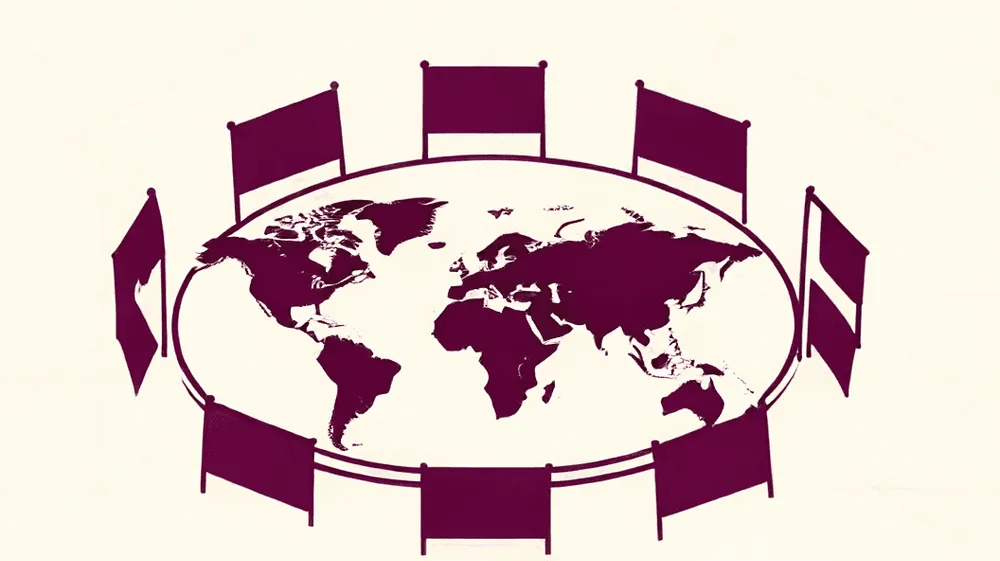
On October 1, 2026, European Defence Commissioner Andrius Kubilius appeared before the European Parliament's defence committee to propose the establishment of an "E5+" European Security Council. This proposed structure would include the United Kingdom, Ukraine, Norway, and Canada alongside EU members. The proposal arrives as an attempt to address what an internal EU report suggests is a shortfall in rearmament progress relative to 2030 goals.
The Evolution of the E5+ Framework
The concept of a European Security Council is not a new development, but rather the latest iteration in a long-standing debate over European defense architecture. Commissioner Kubilius first introduced the idea during a European Defence Agency conference in January 2026, where he noted that the concept had been previously floated by leaders such as Emmanuel Macron and Angela Merkel in 2017 and 2018. However, the current iteration is distinct in its proposed composition and its linkage to a broader defence union.
The timeline of these proposals suggests a deliberate, phased approach to institutional change. In April 2026, Kubilius called for a new intergovernmental treaty for a European defence union. This proposed union would include the United Kingdom, Norway, and Ukraine. A significant aspect of this earlier stage was the questioning of whether current EU treaties are sufficient to meet modern defense requirements. By June 2026, the Commissioner's vision had further evolved to include a specific roadmap for Ukraine, suggesting that Ukraine should eventually become a full member of the defence union. This roadmap is structured in three parts: an initial informal European Security Council, followed by the establishment of a defence union treaty, and concluding with Ukraine's membership. The current October 2026 proposal represents the most expanded version of this vision, bringing in Canada and formalizing the "E5+" terminology.
A Departure from Supranationalism
A central question in the Kubilius proposal is whether the new architecture will function through supranational EU institutions or through an intergovernmental framework. In his April 2026 statements, Kubilius explicitly advocated for an intergovernmental treaty for a European defence union. This distinction is critical for the inclusion of non-EU members. While the European Union typically operates through supranational decision-making, which can be difficult for non-member states like the United Kingdom or Norway to navigate, an intergovernmental approach allows for cooperation between sovereign states without requiring full EU treaty accession.
One reading is that the move toward an intergovernmental model is a pragmatic response to the limitations of current EU treaties. If the goal is to integrate the United Kingdom, Norway, and Canada into a cohesive defense structure, the existing EU legal framework may be too rigid. An intergovernmental treaty could provide a more flexible mechanism for defense coordination. This would allow for a "peacetime defense architecture" that functions alongside existing structures rather than requiring a complete overhaul of EU institutional law, a concept discussed in the Parliament Magazine.
The current membership list for the proposed E5+ council is a proposal rather than an agreed structure. The assessments regarding its potential effectiveness are the Commissioner's own.
Key Insight
Membership and the Inclusion of Non-EU Actors
The "E5+" label is Kubilius's; the proposed participants beyond EU members are the United Kingdom, Ukraine, Norway and Canada. The inclusion of these states suggests a shift toward a "Pan-European" security model that recognizes that European security is not contained within the borders of the European Union. By bringing in Canada, a major North Atlantic partner, the proposal could create a bridge between European interests and broader Atlanticist security frameworks.
The inclusion of Ukraine is particularly significant. As noted in mod.gov.ua, Kubilius has argued that Ukraine should become a full member of the proposed defence union. This would represent a profound change in the security terrain, effectively integrating a state currently outside the formal European defense structures into the core of a new union. However, this integration is presented as the final step in a multi-stage process, which suggests that membership is contingent upon the successful operation of the informal council and the subsequent treaty-based union.
| Proposed Framework | Membership Scope | Primary Legal/Political Nature |
|---|---|---|
| E5+ Security Council | EU + UK, Ukraine, Norway, Canada | Informal Council (Proposed) |
| European Defence Union | EU + UK, Ukraine, Norway, Canada | Intergovernmental Treaty (Proposed) |
| Current EU Defence Framework | EU Member States only | Supranational/Treaty-based |
Structural Redundancy or Strategic Complementarity?
A question the proposal raises is whether it would create redundant layers of bureaucracy that duplicate the existing roles of NATO and the current EU defense mechanisms. Analysts must consider if an "E5+" council would overlap with the North Atlantic Council or the existing European Defence Agency. In my analysis, it could be designed as a peacetime architecture that complements NATO's role in collective defense; the sources reviewed do not describe its functions.
The effectiveness of this complementarity depends on the division of decision-making rights. If the council operates on a consensus-based intergovernmental model, it may avoid the political gridlock that sometimes affects supranational EU decision-making. This could allow for faster responses to regional security shifts. However, if it lacks the binding authority of a treaty-based organization, it risks becoming a mere forum for discussion rather than an engine of action.
The Rearmament Imperative
The driving force behind the urgency of Kubilius's proposal is the current state of European defense spending. According to Lovguiden, an internal EU report has indicated that the pace of rearmament is currently trailing behind the 2030 targets set by the Union. This gap in capability is the most significant catalyst for the proposed E5+ council and the subsequent defense union.
One interpretation of this rearmament lag is that the current EU framework lacks the necessary mechanisms to incentivize or mandate rapid industrial scaling across member states. By creating a new, more inclusive council and a defense union treaty, the proposal seeks to create a more streamlined pathway for defense integration. If the "E5+" can facilitate faster procurement and closer coordination between EU and non-EU manufacturers (such as those in the UK or Canada), it may provide the necessary momentum to meet the 2030 goals. The success of the proposal is therefore directly tied to its ability to convert political cooperation into measurable increases in defense industrial capacity.
Indicators for Implementation
For policymakers, investors in the defense sector, and regional security analysts, several key indicators will determine whether the "E5+" proposal moves from a vision to a reality. The following milestones should be monitored:
- The transition of the "informal" security council into a formalized institution.
- The drafting and ratification of the proposed intergovernmental defense union treaty.
- The specific language used regarding the membership requirements and decision-making rights for non-EU members like the United Kingdom.
- The formalization of Ukraine's status within the proposed union.
- The impact of this new framework on the 2030 rearmament benchmarks.
Sources: lovguiden.dk, theparliamentmagazine.eu, mod.gov.ua, eurointegration.com.ua.