The Compute-Grid Bottleneck: How AI Data Center Energy Chokepoints Are Reshaping Cross-Border M&A
Key takeaways
- The Megawatt Shift: In 2025, Europe, the Middle East, and Africa (EMEA) investors deployed $249 billion into the Americas, and the Americas hosted 16 of the world's 20 largest cross-regional deals, a pull that reflects, in part, the hunt for unencumbered baseload megawatts.
- Three Physical Grid Chokepoints: Hyperscale AI clusters requiring 300 MW to 1 GW of continuous power have collided with 4-to-7-year PJM grid interconnection queues, a de facto connection moratorium in Dublin (until 2028) and grid-congestion limits around Amsterdam that extend into the 2030s, and 128-to-143-week lead times for Large Power Transformers (LPTs).
- Regulatory Counter-Shock: As tech giants bypass public utilities via behind-the-meter nuclear acquisitions, regulators have intervened via FERC's rejection of the expanded Susquehanna nuclear co-location deal and AEP Ohio's mandatory 85% minimum demand tariff for loads above 25 MW.
In 2025, Europe, the Middle East, and Africa (EMEA) investors deployed $249 billion into the Americas, and the Americas hosted 16 of the world's 20 largest cross-regional deals. Some of that capital chased software valuations. Some hunted for something far scarcer: unencumbered megawatts. While boardrooms spent the last 24 months obsessing over semiconductor export controls and TSMC wafer allocations, the primary chokepoint of the artificial intelligence era has quietly shifted downstream from the silicon foundry to the high-voltage transformer and the regional transmission grid.
Supply chain strategists have long modeled maritime straits and critical mineral refineries as the primary fault lines of global commerce. Yet as corporate capital allocation enters the 2027 planning cycle, a multi-billion-dollar AI infrastructure expansion is just as likely to be halted by a five-year municipal grid interconnection queue in Northern Virginia, Frankfurt, or Dublin as by a geopolitical blockade in the Red Sea.
For C-suite executives, sovereign wealth managers, and cross-border dealmakers, the strategic reality has inverted. Compute hardware is mobile; power infrastructure is territorial, heavily regulated, and physically bound by decades of utility underinvestment. The new geopolitical sovereignty is measured not in barrels or terabytes, but in firm, dispatchable baseload gigawatts, and this physical constraint is actively redrawing the global map of Mergers and Acquisitions (M&A), industrial siting, and sovereign capital flows.
Anatomy of the Compute-Grid Chokepoint: Three Physical Constraints
For the past decade, corporate strategy teams treated electricity as a commoditized, elastic operating expense. When cloud providers expanded a regional availability zone, local utilities simply absorbed the incremental load. Generative AI and frontier model training have shattered that assumption.
Whereas a traditional enterprise data center operated on 10 to 30 megawatts (MW) of power capacity, next-generation hyperscale AI clusters demand 300 MW to 1 gigawatt (GW) of continuous power, roughly equivalent to the residential electricity consumption of a city of 750,000 homes, or the entire output of a standard commercial nuclear reactor. This surge has collided with three immovable physical barriers across global electrical grids:
The Baseload vs. Intermittency Clash
A hyperscale AI training cluster represents upwards of $15 billion to $30 billion in depreciating silicon capital. Because frontier graphic processing units (GPUs) lose economic value rapidly as newer architectures ship, hyperscalers cannot afford to let clusters sit idle when the wind stops blowing or solar irradiance drops. AI infrastructure requires 99.999% ("five-nines") firm, dispatchable baseload power.
For years, corporate environmental, social, and governance (ESG) commitments relied on virtual Power Purchase Agreements (vPPAs), buying renewable energy certificates from distant solar or wind farms while drawing carbon-intensive power from the local grid at night. Regulators and grid operators have now closed that loophole. Without massive co-located battery storage, nuclear fission, hydroelectric surpluses, or natural gas peaker plants, intermittent renewables alone cannot anchor a gigawatt-scale compute campus.
The Interconnection Queue Freeze
Even where power generation exists in theory, connecting a new facility to the high-voltage transmission network has become a multi-year regulatory trap. Across major North American and European electricity markets, the volume of generation and load projects waiting for grid impact studies exceeds current installed capacity several times over.
In the PJM Interconnection, the largest regional transmission organization in the United States serving Northern Virginia's "Data Center Alley," wait times from initial application to commercial operation routinely stretch from four to seven years. In Europe, the bottleneck has crossed from bureaucratic delay into outright regulatory exclusion. In Ireland, data centers drew 23% of all metered electricity in 2025, more than every urban household in the country combined, according to the Central Statistics Office as reported by the Irish Times. State grid operator EirGrid enforced a de facto moratorium on new data center connections in Dublin through 2028. Similarly, Dutch transmission operator TenneT has paused new large grid connections in congested areas around Amsterdam and Schiphol, with some constraints expected to last until roughly 2035.
The Hidden Hardware Bottleneck: Large Power Transformers (LPTs)
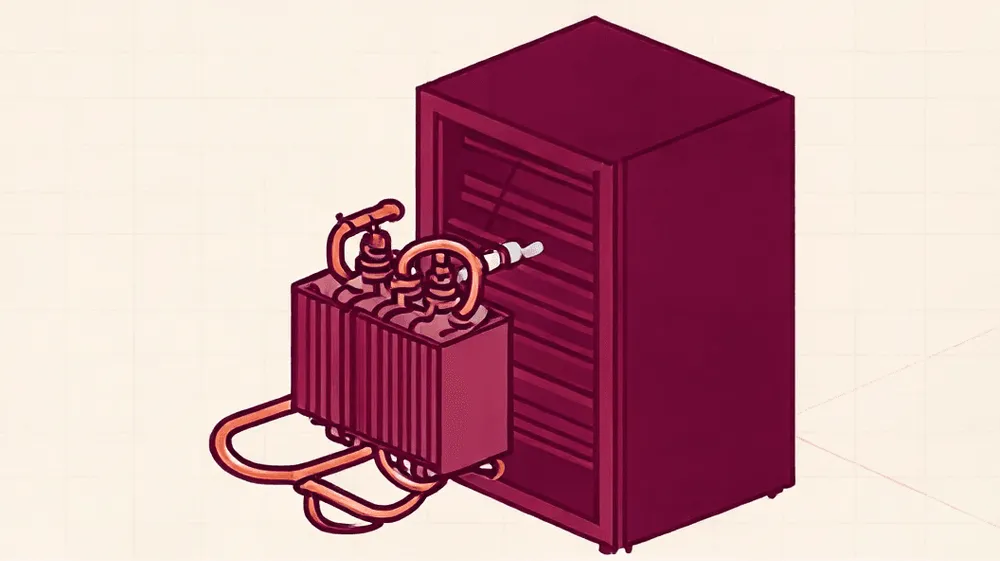
Beneath the regulatory gridlock lies an acute industrial supply chain chokepoint that mirrors the semiconductor crisis: Large Power Transformers (LPTs) (units rated above 100 MVA) and Generator Step-Up (GSU) transformers. LPTs are custom-engineered, 100-to-400-ton industrial units required to step voltage up for long-distance transmission and step it down for data center distribution.
According to Wood Mackenzie's 2025 transformer supply chain survey, lead times for Large Power Transformers have surged from a historical average of 50 to 60 weeks to 128 weeks (roughly 2.5 years), while GSU transformers average 143 weeks (nearly 3 years) and medium-voltage switchgear requires 44 to 100 weeks. The root cause is a classic mid-stream material monopoly: Grain-Oriented Electrical Steel (GOES), a specialized silicon-steel alloy essential for transformer cores. Global production of high-permeability GOES is concentrated among a handful of mills in China (Baowu), Japan (Nippon Steel), South Korea (POSCO), Europe (Thyssenkrupp), and a single domestic producer in the United States (Cleveland-Cliffs). With a supply deficit that Wood Mackenzie estimated at roughly 30% for power transformers in 2025, and sharply higher copper prices, an order placed in late 2026 will not arrive on a construction pad until 2029.
| Global Data Center Hub | Average Grid Connection Wait Time | Primary Structural Bottleneck | Industrial Electricity Cost Profile (indicative) | Strategic Trajectory (2026–2028) |
|---|---|---|---|---|
| Northern Virginia (PJM, USA) | 4 to 7 Years | High-voltage transmission lines & 128-week LPT delays | Moderate ($0.07–$0.09/kWh) | Shift toward behind-the-meter nuclear/gas in Pennsylvania & Ohio |
| Texas (ERCOT) & Alberta | 1.5 to 3 Years | Grid stability during extreme weather peaks | Low ($0.05–$0.07/kWh) | Primary global magnet for rapid natural gas + solar co-location |
| Quebec & British Columbia | 2 to 4 Years | State utility allocation caps for industrial megaprojects | Ultra-Low ($0.04–$0.06/kWh) | Premier destination for green-mandated sovereign AI workloads |
| Dublin & Amsterdam (EU FLAP-D) | Dublin: de facto moratorium to 2028; Amsterdam: congestion limits into the 2030s | Data centers drew 23% of Irish metered electricity in 2025; urban substation congestion | High ($0.16–$0.28/kWh) | Capital flight toward Nordic hydro and North American energy basins |
| UAE & Saudi Arabia (Gulf Corridors) | 1 to 2 Years | Semiconductor import licensing (US BIS export rules) | Ultra-Low ($0.03–$0.05/kWh) | Aggressive sovereign buildout of "Compute-for-Energy" JVs |
Geopolitical Realignment: Why $249 Billion Flowed Toward the Americas
The divergence between energy-abundant and energy-starved jurisdictions explains one of the most striking macroeconomic shifts of the decade. According to McKinsey's analysis of 2025 cross-regional deal flows (The Americas lead global trade deals), capital has tilted decisively toward North America: EMEA-based corporate and institutional investors poured $249 billion into the Americas in 2025 alone, while the Americas hosted 16 of the world's 20 largest cross-regional deals.
Why are European industrial conglomerates, pension funds, and sovereign wealth vehicles deploying record capital across the Atlantic rather than building domestic digital and industrial capacity? Because in an AI-driven industrial economy, energy policy is industrial policy.
The North American Energy Magnet
Despite localized transmission bottlenecks in legacy coastal hubs, the broader North American continent possesses a structural geopolitical advantage that Europe cannot replicate: abundant, domestically controlled natural gas (across the Permian, Marcellus, and Western Canadian Sedimentary basins), vast geographic expanses for co-located solar and wind in Texas (ERCOT) and the Midwest (MISO), an existing fleet of 94 commercial nuclear reactors across 54 power plants (EIA) open to uprating and relicensing, and massive hydroelectric surpluses in Quebec and British Columbia.
When a European industrial firm or infrastructure fund evaluates where to acquire or build energy-intensive manufacturing, chemical processing, or AI compute infrastructure, North America offers both regulatory speed and industrial power tariffs well below those in Western Europe.
Middle East Sovereign Arbitrage: The "Compute Switzerland" Play
Simultaneously, Gulf sovereign wealth funds, led by the UAE's Mubadala and MGX alongside Saudi Arabia's Public Investment Fund (PIF), have recognized that their true sovereign leverage in the late 2020s is no longer just exporting crude oil to Asia, but converting domestic natural gas and desert solar arrays into exported AI compute tokens.
While training data and inference outputs can travel across subsea fiber-optic cables in milliseconds, transmitting gigawatts of electricity across continents is physically impossible. Instead of bringing power to the data centers in London or Singapore, Gulf strategists are bringing the data centers to the power fields of Abu Dhabi and Dammam. By offering sovereign capital, streamlined permitting inside special economic zones, and sub-$0.04/kWh power, the Gulf has positioned itself as an indispensable co-investor in Western infrastructure M&A, trading capital and energy capacity for access to Western semiconductor ecosystems.
The European Industrial Squeeze
Caught between North American energy abundance and Gulf state capitalism, Europe faces an acute competitiveness dilemma. Having retired nuclear capacity in key industrial heartlands while severing pipeline gas imports, European industrial electricity prices remain structurally elevated. Coupled with complex permitting regimes and the rollout of the Carbon Border Adjustment Mechanism (CBAM), European multinationals are increasingly utilizing cross-border M&A as an escape valve, acquiring operational footprints inside energy-secure North American corridors rather than waiting half a decade for domestic grid upgrades.
Strategic Adaptation: How Multinationals Are Bypassing the Grid
Faced with five-year utility queues, the world's largest capital allocators are no longer waiting for regulated public utilities to build transmission lines. Instead, corporate M&A and infrastructure development have pivoted toward vertical energy integration and Behind-the-Meter (BTM) isolation.
- Direct Nuclear Acquisitions & Restarts: Hyperscalers have moved from signing virtual renewable contracts to locking up physical nuclear fission facilities. Following Microsoft's landmark 20-year power purchase agreement with Constellation Energy to restart Three Mile Island Unit 1 in Pennsylvania (officially renamed the 835-MW Crane Clean Energy Center, which won a pivotal FERC waiver on June 1, 2026 allowing it to move existing PJM interconnection rights to the unit ahead of its targeted 2027 restart) and Amazon Web Services' (AWS) $650 million acquisition of Talen Energy's Cumulus data center campus adjacent to the roughly 2.5-GW Susquehanna nuclear power plant, tech giants are effectively outbidding municipal utilities for carbon-free baseload nuclear assets.
- Behind-the-Meter (BTM) Natural Gas Islanding: In energy basins like Texas, Alberta, and Ohio, infrastructure developers are constructing "islanded" compute campuses connected directly to wellhead natural gas turbines (equipped with carbon capture readiness) and dedicated solar-plus-storage arrays. By operating entirely "behind the meter" without drawing power from or feeding power back into the public transmission grid, developers bypass multi-year federal and regional interconnection queues entirely.
- Energy-Infrastructure Joint Ventures (The $30B–$100B Consortium Model): Because acquiring land, power plants, and compute infrastructure simultaneously exceeds the balance sheet appetite of even the largest corporations, cross-border M&A has shifted toward mega-consortia. Partnerships blending asset managers (such as BlackRock and Global Infrastructure Partners), sovereign wealth funds, and tech hyperscalers are buying independent power producers (IPPs) outright, converting utility companies from slow-growth dividend stocks into strategic growth targets.
Understanding the geopolitical grid bottleneck is only half the equation. When a developer or corporate borrower brings a $100 million data center or power generation proposal to a bank, how do senior lenders stress-test the cash flows? Read our companion teardown on how commercial banks structure debt, price Power Purchase Agreement (PPA) counterparty risk, and enforce Debt Service Coverage Ratio (DSCR) covenants in Underwriting the AI Power Buildout: Structuring Project Finance, PPA Covenants, and Offtake Risk.
Financing or Underwriting Energy-Intensive Infrastructure
The Regulatory Counter-Shock: FERC Co-Location Rulings and "Large Load Tariffs"
While Behind-the-Meter co-location appears to solve the timeline crisis for well-capitalized multinationals, a major political and regulatory counter-shock is now governing the 2026 to 2027 cycle.
When a hyperscaler locks up an existing 800 MW nuclear reactor or gas plant exclusively for a private data center, those megawatts are removed from the public wholesale electricity grid. The result for surrounding manufacturers, small businesses, and residential households is immediate: grid capacity auctions spike, reserve margins tighten, and consumer electricity bills surge.
Regulators have intervened forcefully through two landmark precedents that every strategy team must model:
- The FERC Susquehanna Co-Location Rejection: On November 1, 2024, the U.S. Federal Energy Regulatory Commission (FERC) rejected, in a 2-1 vote (Utility Dive), an amended Interconnection Service Agreement (ISA) proposed by PJM that would have expanded the behind-the-meter nuclear power connection at Talen Energy's Susquehanna plant for Amazon's data center from 300 MW to 480 MW (en route to 960 MW). Regulated utilities American Electric Power (AEP) and Exelon successfully challenged the arrangement, arguing that siphoning behind-the-meter nuclear power without paying proportional grid fees could shift up to $140 million annually in transmission costs onto ordinary PJM ratepayers.
- The 85% Minimum Demand "Large Load Tariff" (AEP Ohio Precedent): Across North America, public utility commissions are now enforcing strict cost-causation tariffs. In a landmark July 9, 2025 order, the Public Utilities Commission of Ohio (PUCO) approved a mandatory Data Center Tariff for AEP Ohio targeting any new data center facility with a peak load above 25 MW. Under this structure, operators must pay a minimum monthly demand charge equal to 85% of their subscribed capacity for up to 12 years, regardless of how much electricity they actually use, backed by financial collateral requirements and an exit fee if the contract is terminated early.
The 2027 Executive Risk Matrix: Four Chokepoints Every Strategy Team Must Model
Whether your organization is allocating capital to digital infrastructure, planning cross-border manufacturing expansion, or evaluating commercial counterparties, energy availability must now be modeled with the same forensic rigor as foreign exchange risk or tariff exposure.
- Audit Your "Queue-to-Operation" Exposure: Never accept a developer's or subsidiary's projected facility opening date at face value. Demand to see the signed Facilities Study and executed Interconnection Service Agreement (ISA) with the regional transmission operator. Any expansion plan relying on an unapproved grid queue in a Tier-1 metropolitan market carries an automatic 36-to-60-month execution delay risk.
- Trace the Electrical Equipment Supply Chain (Tier-2 and Tier-3 Suppliers): Ensure Engineering, Procurement, and Construction (EPC) contracts have locked in production slots for Large Power Transformers (128-week average lead time) and Generator Step-Up units (143-week average lead time). Verify whether the transformer manufacturer relies on single-source imports of Grain-Oriented Electrical Steel (GOES) vulnerable to anti-dumping tariffs or export controls.
- Stress-Test "Large Load Tariff" Liability on the Balance Sheet: Following the PUCO and AEP Ohio precedent, taking down 25 MW to 100 MW+ of grid capacity now creates a 12-year debt-like obligation via mandatory 85% minimum demand charges. Strategy teams must coordinate directly with corporate treasury and credit officers before signing long-term utility take-or-pay agreements.
- Align Sovereign Data Residency with Sovereign Power Surpluses: Multinationals operating across emerging markets and strict regulatory jurisdictions often face legal mandates to keep citizen and financial data inside national borders. Before committing to in-country cloud or AI deployments, evaluate whether the host nation's domestic grid possesses the firm reserve margin to support high-density compute without triggering sovereign power rationing.
In the second half of the 2020s, competitive advantage belongs to the organizations that recognize a fundamental physical truth: the digital economy is neither weightless nor virtual. It is anchored in electrical steel, copper windings, transformer oil, and baseload megawatts, and the executives who map those energy chokepoints first will dictate the next wave of global M&A.
Underwriting the AI Power Buildout: Structuring Project Finance, PPA Covenants, and Offtake Risk
Companion Analysis
Sources: McKinsey, cross-regional deal flows, Irish Times on CSO data, Wood Mackenzie transformer survey, World Nuclear News on Crane, Utility Dive on FERC and Susquehanna, AEP Ohio data center tariff, POWER Magazine on the PUCO order, US EIA.